When Artificial Intelligence Is Useful Rather Than Evil
By James WJ Wilson · Useful AI in literary speculative fiction
Science fiction about artificial intelligence often asks what happens when the machine becomes an enemy. Another question interests me more: what happens when the technology is genuinely useful? Better journeys, more reliable services and fewer small frustrations are powerful reasons to welcome a system into everyday life.

Readers drawn to the humane technological questions in Kazuo Ishiguro’s Klara and the Sun or Ted Chiang’s Exhalation may recognise the territory. Do Spiders Leave Footprints? approaches it through London’s infrastructure and the people who come to rely on it, rather than through an AI villain.
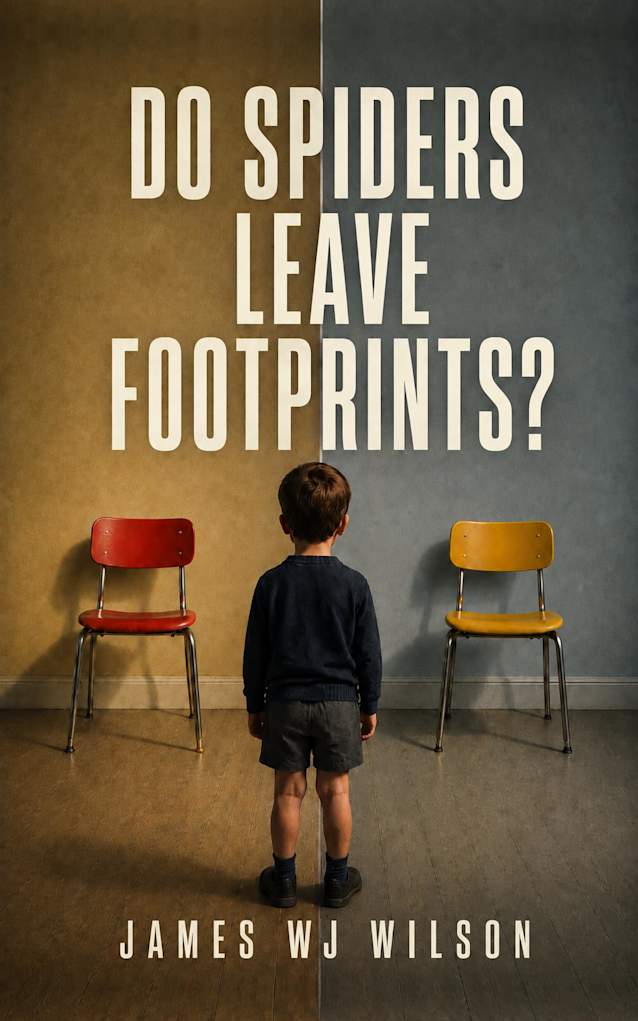
From the novel — Chapter 21 — BETTER
The trains got better before anyone agreed what better meant.
They were more punctual. Buses arrived more evenly. Ambulances crossed junctions faster. Roadworks collided with one another less often.
Nobody had invented a single machine that did this. The systems already existed. What changed was that more of them were allowed to listen to one another.
The transport authority called the programme OneFlow.
Mara first noticed it on a Thursday evening because her train changed platform before anybody became angry.
She was standing beneath the departure board at 17:42 with perhaps two hundred other people.
PLATFORM 4.
Then:
PLATFORM 6.
Her phone vibrated half a second later.
MOVE TO PLATFORM 6. WALK VIA EAST STAIRS. LESS CROWDED.
People around her received different instructions. Some were sent west. Some were told to wait.
A man beside Mara looked at his screen. His told him to stay where he was.
“Useful,” he said.
“I’ll let you know.”
Mara took the east stairs. By the time she reached platform six, the train was arriving.
There were seats.
Her phone displayed:
ARRIVAL 18:16. 4 MINUTES EARLIER THAN ORIGINAL ROUTE.
“Nice,” Mara said.
YOU’RE WELCOME.
She smiled despite herself.
At home Tom was cooking. He had chopped everything before she arrived, which was still unusual enough for Mara to notice and common enough that she did not mention it.
He knew about OneFlow because everybody in logistics did and claimed it was stealing their best ideas.
Mara reminded him that his best idea had been delaying parcels.
“Visionary,” Tom said.
Ellie looked up from the table. “Can systems steal?”
Tom tried to refer the question to Mara because she had opinions about terms and conditions. Mara rejected the promotion.
Ellie tried again. “If it uses your idea and makes it better, is it still yours?”
Tom opened his mouth, then closed it.
Mara laughed. “Good question.”
“That means you don’t know.”
“Yes.”
The question behind the scene
This is an extract from Do Spiders Leave Footprints?, my near-future literary speculative novel. The scene is deliberately ordinary. Technology works, people adapt, and the questions begin in a family conversation rather than a dramatic malfunction.
If you’re looking for fiction about helpful AI, human judgement and the point where convenience becomes dependence, the novel explores that tension across homes, hospitals, streets and control rooms.
Read Do Spiders Leave Footprints?: Amazon Kindle (US) · Apple Books (US) · Google Play Books
More about the novel · About James WJ Wilson
#LiterarySpeculativeFiction #ScienceFictionBooks #UsefulAI #BookExcerpt
Comments