Memory, Evidence and Unreliable Certainty in Literary Fiction
By James WJ Wilson · Memory and evidence in literary fiction
Books about memory and identity sometimes involve amnesia, altered records or elaborate deception. Ordinary family recollections can be just as unsettling. Two people remember the same event differently; a photograph settles one detail while leaving the experience itself unresolved.

I’m interested in the space between evidence and certainty. Readers of Kazuo Ishiguro’s The Buried Giant or the layered experience of time in Emily St. John Mandel’s Sea of Tranquility may recognise the question, even though the setting here is a family kitchen.
From the novel — BEFORE — opening section
Adrian explained that he was writing down the earliest things he remembered before checking photographs, records or other people’s accounts.
“Before you ask us?” his father said.
“Yes.”
His mother looked up from the vegetables.
“Bit late.”
Adrian ignored her.
His father asked about the other memories and listened properly to the answers. His mother corrected one date. His father disagreed with her correction. They argued about it briefly while passing the potatoes, then moved on without settling it.
Adrian looked from one to the other.
Neither appeared troubled.
After dinner his mother began stacking the plates.
“What happened afterwards?” Adrian asked.
“With dinner?”
“The bite.”
“We took you to the doctor.”
“I mean after that. With spiders.”
She stopped with two plates in her hands.
The amusement left her face, though not completely.
“You stopped picking them up.”
“Immediately?”
His mother looked at him for a moment.
“I think so.”
Then she carried the plates into the kitchen.
Adrian had no memory of deciding not to.
His sister Julia, asked separately, remembered everybody searching beneath the cupboards with a torch. His father thought there might have been one. His mother did not remember it at all. Adrian had remembered the torch before asking any of them and distrusted the memory afterwards.
The medical note survived.
SMALL PUNCTURE WOUNDS / LOCAL SWELLING.
POSSIBLE INSECT OR SPIDER BITE.
No species.
No certainty.
His mother also said the kitchen had been blue.
Adrian said no.
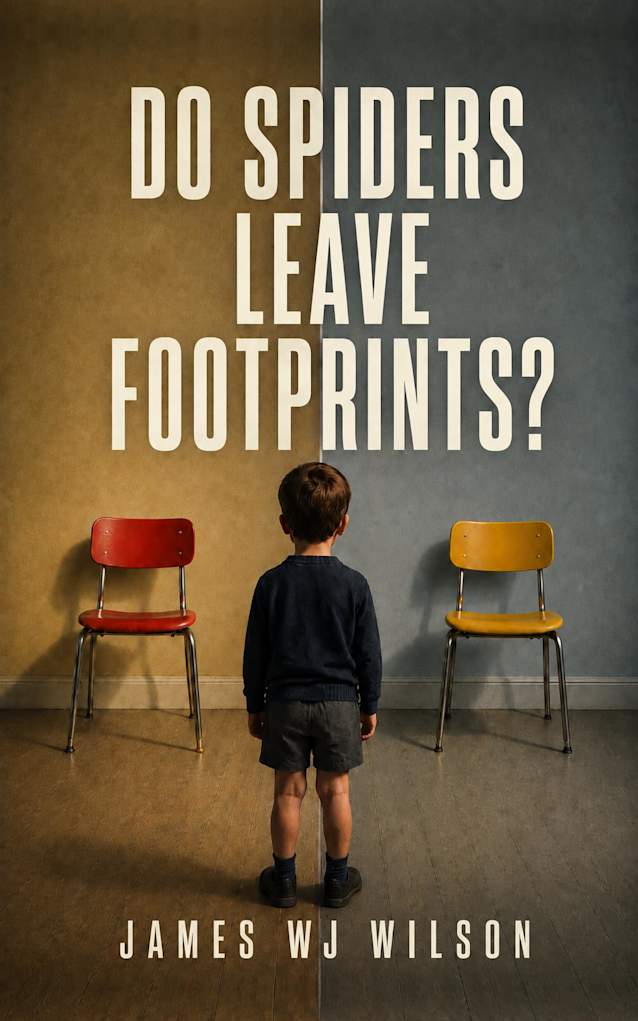
Yellow chair. White cupboards. Brown floor.
She found a photograph.
The cupboards were pale blue.
The chair was red.
Adrian looked at it for a long time.
“That isn’t the chair.”
“It is.”
“No.”
“You can see it.”
“That isn’t the chair I remember.”
His mother laughed.
“You were four.”
The photograph showed a chair.
His memory contained another.
He still remembered yellow.
He still remembered the spider.
What he did not remember was the child his mother described before it: fearless enough to be useful.
The question behind the scene
This passage opens the wider inquiry in Do Spiders Leave Footprints?, a literary speculative mystery set in near-future London. Its people use records, memories and technology to make sense of their lives, but a more accurate detail does not automatically make an explanation complete.
The excerpt is intentionally offered without resolving the disagreement. The novel is about what evidence permits us to conclude, not simply finding a hidden liar.
Read Do Spiders Leave Footprints?: Amazon Kindle (US) · Apple Books (US) · Google Play Books
About the book and available editions · About James WJ Wilson
#LiteraryFiction #MemoryAndIdentity #SpeculativeFiction #BookExcerpt
Comments