The New Dystopia: When Nobody Is Actually in Control
By James WJ Wilson · Dystopian fiction about automated decision making
Dystopian fiction does not need a single villain pulling the strings. Sometimes the uncomfortable story is about competent people, legitimate safeguards and systems whose responsibilities overlap without anyone possessing a complete view.

Readers interested in institutional and technological power in Dave Eggers’s The Every, Don DeLillo’s White Noise or William Gibson’s Pattern Recognition may find a related question here: what happens when a system knows enough to warn us, but knowing is not the same as having permission to act?
From the novel — Chapter 25 — PERMISSION
The rain began on a Sunday and became a problem on Tuesday.
By Wednesday roads were closing, trains were slowing and one hospital had moved patients from a ground-floor ward.
At 02:17 Compass predicted that the B147 would become impassable within two hours.
Confidence: 0.86.
It recommended closing the road.
The county control room was staffed overnight, but closures above a defined threshold required a duty manager.
The duty manager was asleep.
The alert woke him at 02:23. He opened it at 02:31, checked the river gauge, saw that it remained below the physical closure threshold and called the highways supervisor.
No answer.
At 02:48 Compass updated the prediction.
EXPECTED IMPASSABILITY: 03:51. CONFIDENCE: 0.91.
The supervisor answered at 03:04.
At 03:10 Compass recommended immediate closure.
At 03:18 a crew was dispatched.
At 03:37 the first car entered standing water.
It stopped.
A second stopped behind it. Another approached from the opposite direction.
Fire crews removed four people. Nobody died. A firefighter carrying a dog through waist-high water was on the front page by breakfast.
The road was formally closed at 03:52.
Mr Vale read the timeline at 08:11.
Sanjay was already in his office.
“The system was right.”
“Earlier,” Sanjay said.
By Thursday the timestamps were on television.
“If the system knew,” a presenter asked a minister, “why didn’t anyone act?”
“Because knowing is not authority,” Sanjay said to the screen.
The emergency review began the following week.
A county representative warned that closing every road predicted to flood would close some roads that stayed dry.
Historical false-positive rate for comparable predictions: 7.4 percent.
A fire officer looked at the figure.
“Seven percent is not nothing.”
“No,” Mr Vale said.
They moved to reversibility.
A road closure could be reversed. A generator could be moved again. A warning could be corrected.
Medical treatment was different.
Arrest was different.
Compulsory evacuation was harder to undo than changing a traffic signal.
By the end of the day the whiteboard had three columns.
REVERSIBLE.
REVERSIBLE WITH COST.
NOT PRACTICALLY REVERSIBLE.
The question behind the scene
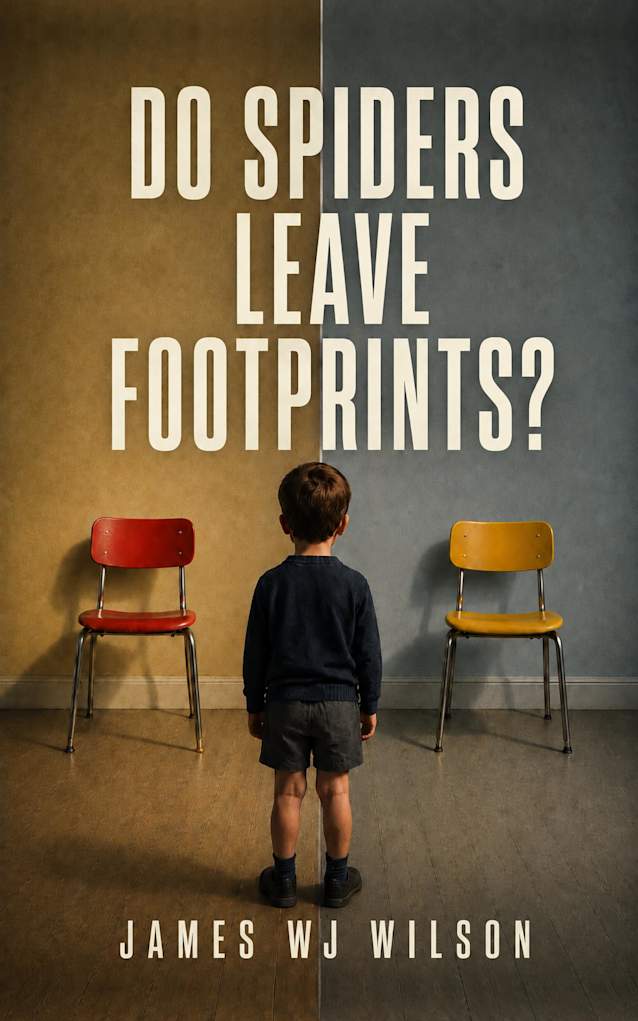
This fictional incident appears in Do Spiders Leave Footprints?, my near-future London novel about useful technology, human judgement and the limits of institutional control. Compass does not need to be an evil machine for the situation to become difficult.
The safeguards have reasons to exist. So does the urgency. The scene asks what responsibility looks like when accurate predictions, legal authority and human action operate on different clocks.
Read Do Spiders Leave Footprints?: Amazon Kindle (US) · Apple Books (US) · Google Play Books
About the book and available editions · About James WJ Wilson
#DystopianFiction #LiterarySpeculativeFiction #AIAndSociety #BookExcerpt
Comments